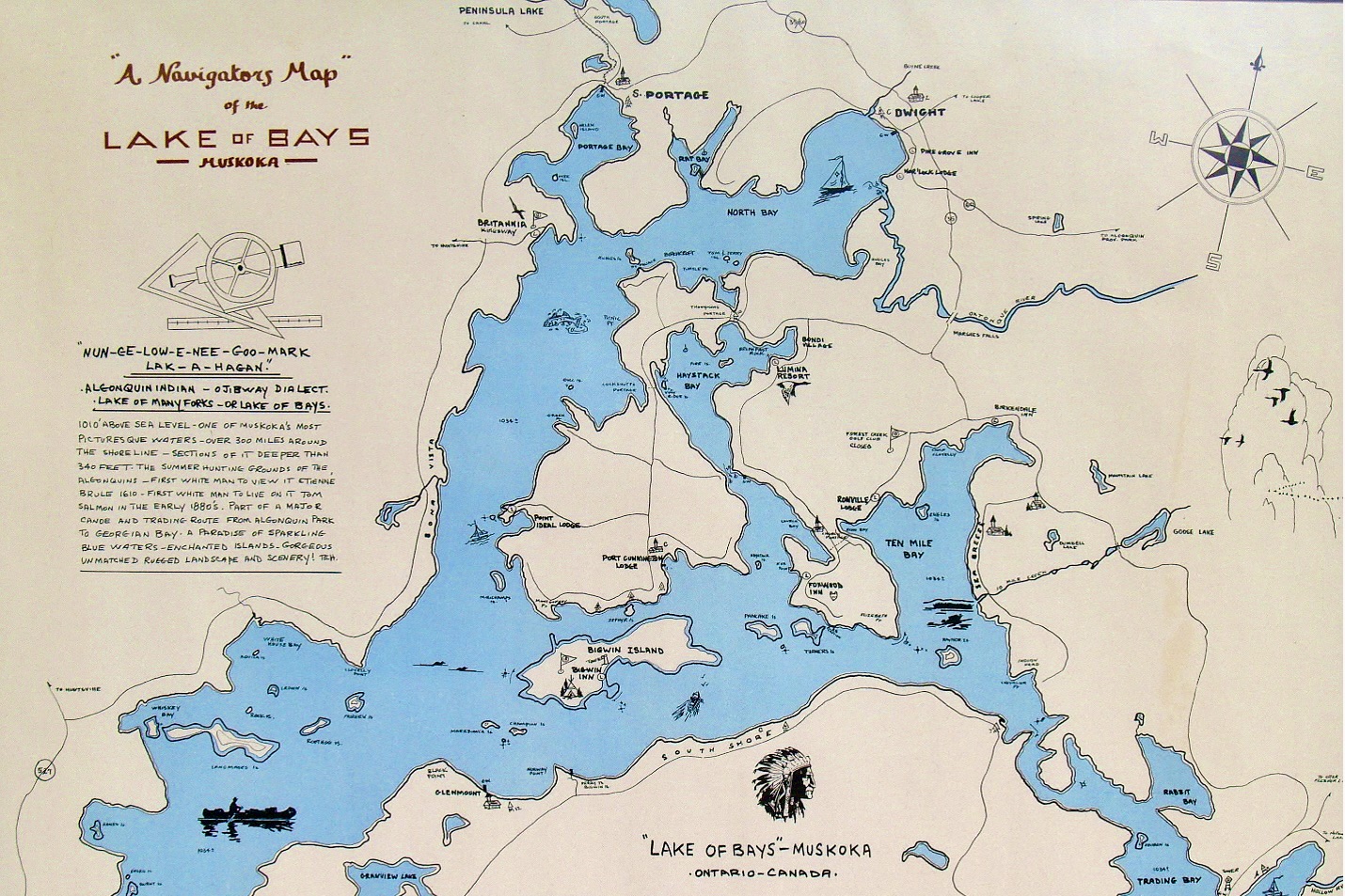
Map courtesy Helen Cunnington

Doug Cunnington, Grandson of B.H. Cunnington wrote many books about the history of Lake of Bays. He grew up at Port Cunnington Lodge, founded by his Grandfather in 1890. B.H. first settled on his grant land on the Port Cunnington peninsula in 1878. He cleared land and built a log home as required by the land grant.
There he raised his first six children with his wife Prudence. Farming in Muskoka was difficult at best, so in order to support his growing family, he bought the lakefront property that he transformed into Port Cunnington Lodge.
Doug’s love of Lake of Bays and his admiration for all of his Grandfather’s achievements including acting as postmaster and Justice of the Peace, establishing a church, providing for his family and guests by growing his own vegetables, raising chickens, cows, pigs and sheep and bringing up six more children drove Doug to preserve the rich history of all those early settlers who struggled, stayed and brought tourism to Lake of Bays.
His books include ‘A History of The Cunningtons of Port Cunnington‘.
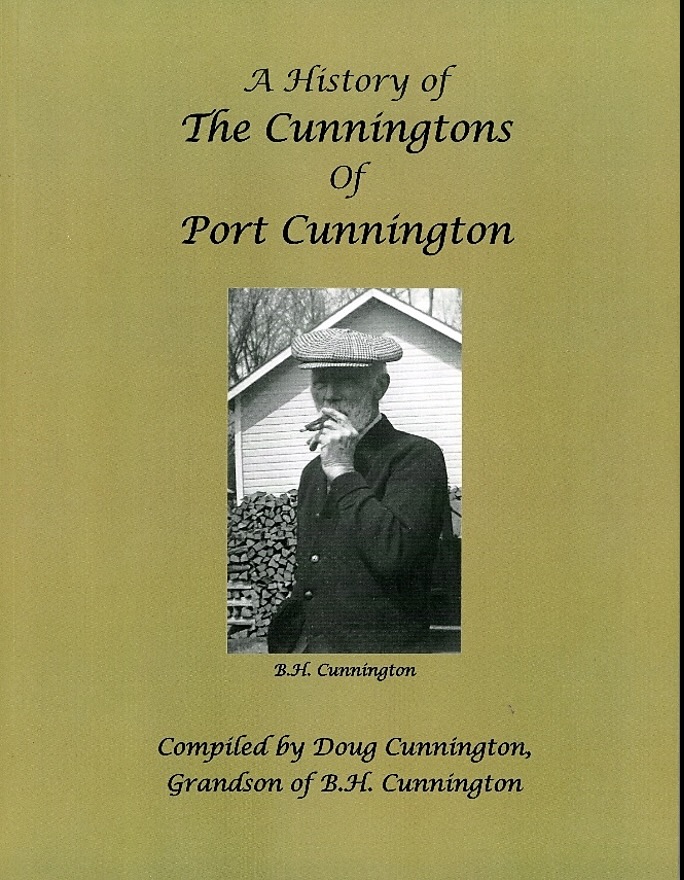
Doug said his heritage stemmed not from a family tree but rather a hedge. B.H.’s first wife died early on. He remarried a widow with three children of her own, and they had three more, of whom Doug’s Father was one. This book documents that hedge.
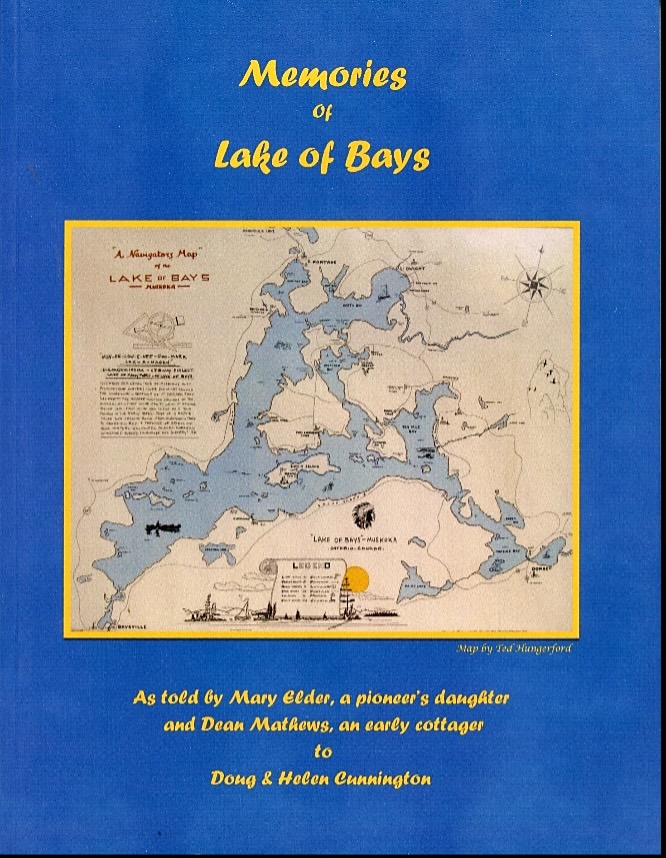
‘Memories of Lake of Bays’ shares the memories of Mary Cunnington Elder, regaling us with stories of growing up as a pioneer’s daughter, and Dean Mathews of a very early cottaging family who shared his reflections of summers of his childhood on Lake of Bays.
His family cottage was in the same bay as Port Cunnington Lodge, so he and Mary knew each other from childhood. The highlight of this book is the amazing number of restored photos depicting life on the Lake in the early 1900s. Doug always contended that photos made the book.
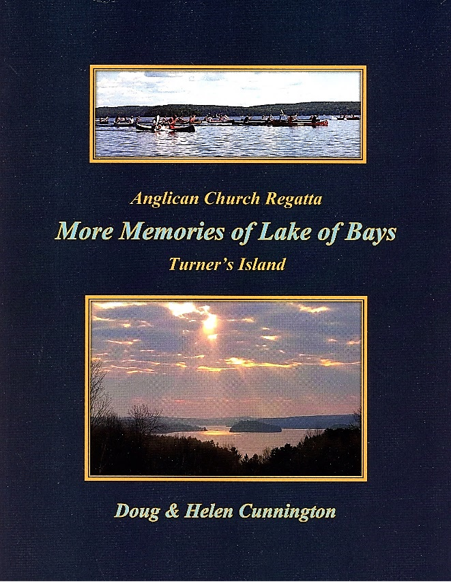
‘More Memories of Lake Bays’ was written following the end of 90 years of the Anglican Church Regatta. It had been the highlight of the summer and supported St. James’ and St. John’s churches at Port Cunnington and Fox Point. It was Doug’s hope that he could preserve those happy summer memories.
The hosting each year rotated between the four main resorts in the Port Cunnington, Fox Point area. Hosting was a major undertaking. As the number of host resorts dwindled, it became too much to expect only the two remaining resorts to host every other summer. Not wanting it to become just a distant memory, Doug gathered stories and artifacts and photos highlighting the many events of 90 wonderful years.
Doug and his wife Helen wrote this book jointly. Her hope was to preserve her cherished memories of the summers of her childhood spent on Turner’s Island for her family, but it was symbolic of all cottage life back then. In those bygone years, early cottagers relied on the settlers. Syd Turner bought the Island in 1908 when it was still Point Elizabeth, before the height of the Baysville dam was increased, raising the level of the Lake six feet.
It was originally part of Tom Salmon’s Land Grant. Cottage life those many, many years ago was nothing like cottage life on the Lake today. Today’s cottagers would probably call it ‘roughing it’ but it was definitely a gentler, simpler time.
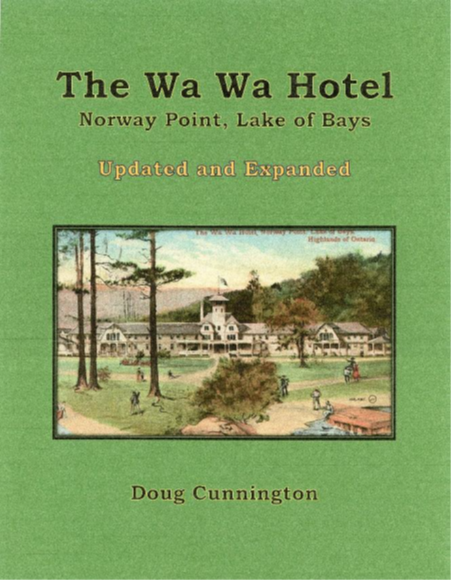
‘Wa Wa’ was written not only to preserve the story of the fabled Wa Wa and its tragic end but to take us back to that period of privileged summers at Grand Old Hotels. The Wa Wa was built in 1908 during the same nostalgic era as Bigwin Inn. It was owned by the Canada Railway News Company Ltd. It burnt to the ground on August 21, 1923.
Eleven people lost their lives that night. Nearby cottagers took in guests. The Steamboat Iroquois was fired up and raced to Norway Point to take survivors across the Lake to Bigwin Inn, where C.O. Shaw provided food and shelter. This heartbreaking tragedy is brought alive by stories of nearby cottagers who took in survivors, guests, and residents on the Lake who saw the flames.
It is documented with carefully restored photos taking you inside and around the grounds to experience its grandeur and feel the sadness of all that was left.
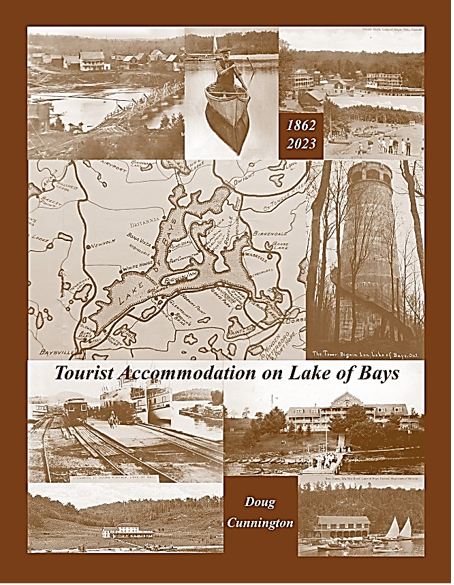
‘Tourist Accommodation on Lake of Bays 1862-2023‘ was an extensive research undertaking. It documents the early land grant settlement of Lake of Bays, the beginning of tourism, travel to Lake of Bays from the big cities in the south by train and steamboat, and details of one hundred and eighty tourist establishments. All, as Doug did so well, brought to life with stories, original documents and, of course, photos.
Life was hard, and some abandoned their land grant properties, but many stayed. Doug wrote, “Those that did persevere and stay realized that despite all the hardships, this beautiful lake had something they never could have had as city dwellers. It was not just the clean air and fresh water but the freedom to make something of their lives and provide for their families.”
“If large-scale farming didn’t work, small subsistence farming to provide for their families usually did. Eventually, when the realization came that folks from the cities longed for summer escapes to places such as Lake of Bays, they opened their doors to these summer vacationers who appreciated not only the beauty of the lakeshore, forests and streams but the amazing hospitality the early settlers provided.”
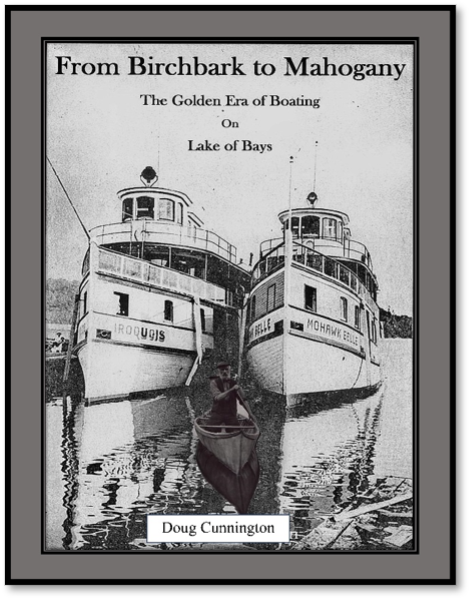
The last book Doug wrote was ‘From Birchbark to Mahogany’. In those bygone days, boats were of great importance and necessity for getting around on Lake of Bays. It was how you went to church, visited friends and neighbours and got supplies. It was how summer folk got to this land-locked lake to escape the heat of the big cities of the south.
The great steamboats brought you from the train station at the dock in Huntsville across Peninsula Lake to the North Portage where travellers disembarked and took the Portage Flyer across the mile-long portage to the South Portage. From there they boarded the Iroquois or Mohawk Belle to their final destination. The very first settlers were taught by the indigenous people who were the first inhabitants of the area to make canoes and snowshoes. For Doug’sGrandfather, B.H. Cunnington, his birchbark canoe was his favourite mode of transportation.
Among the kudos for the book, Judith Mills, past chair of The Lake of Bays Heritage Foundation, wrote, “The population of people who experienced the Gilded Age is dwindling. Doug Cunnington’s book From Birchbark to Mahogany documents the magnificent history of ships and boats that plied the waters of Lake of Bays, for the enjoyment of many generations to come.”
To enquire about any of Doug’s books, please contact Helen Cunnington at [email protected].